
Driving over 3,000 km (1800 miles) in South Africa you sure learn a lot! I drove around South Africa and through Lesotho and eSwatini over the course of two weeks provided a lot of experiences and knowledge about how locals drive and the differences in driving in each country. Nearly everyday behind the wheel driving on the left side of the road and adapting to all it threw at me. I’d say South Africa is a great first country to try driving in Africa and we’ll worth doing! The infrastructure is there and South Africa boasts a wonderful diversity of landscapes sure to delight all interests, from mountains, oceans, farmland, wildlife and so much more! Below you will what I learned, some driving tips, expectations and understandings that will hopefully help you drive and enjoy a trip in your own vehicle around South Africa.
First thing to know about is how rental cars work in South Africa!
Depending on where you will travel determines the type of car. In the city, get a smaller compact car and for longer distance it might be best to get an SUV as you never know what you might get into. If you will go on 4×4 type roads get that vehicle, it will be needed to reach some hiking areas, some game reserves, Sani Pass in Lesotho, etc. Research where you wish to go so you know what type of vehicle is best for your trip in South Africa.
Keep in mind in South Africa they drive on the left side of the road, most cars are manual and the driver sits on the right side of the vehicle. If going with manual this means you shift with the left hand but at least the pedals are universal! It is not as bad as it sounds, you will adapt quick enough!
Choose wisely who you rent the vehicle from as not all are equal as I learned. Also know that rentals expect you to not just return with a full tank of gas but to also clean the car inside and out.
– Yes, you need to take the rental to a car wash!
– Yes, full tank means fill until it stops because they charge extra if not full to the brim!
From experience I recommend using the international bigger companies to save a lot of hassle. I know sometimes going for cheaper sounds great but believe me, in the end you will save money and confusion. I used Pace Rental (via Carwiz) and won’t be doing that again! Pace Rentals will provided the unlimited mileage you need and good cars but so many other things would have been way easier had I gone with the usual bigger companies.
For example, the usual companies are all in the usual car rental area of the airport while Pace Rentals had the check in process via tablet with an agent I met outside arrivals. You couldn´t show up when you wanted but instead had to arrive at the specified reservation time…I arrived 2 hours late (expecting the usual) and thankfully the agent was still there!
– Just use Avis/Budget, Enterprise, etc!
– Get unlimited miles, it´s important for a trip in South Africa.
Will you cross borders while here? If so know that you need a letter granting permission from the rental agency to take the vehicle abroad…often you can get it day of but in reality is it takes a few days to process so let them know in advance. There is also an extra cost associated to produce this letter. If you go with bigger rental companies it is a lower fee maybe 650R per crossing but at smaller often cheaper companies it is about 2000R per crossing (this is likely negotiable, I for sure negotiated!). The bigger companies are also much quicker to produce the letter…same day is not hard with them.
With Pace Rentals an any other smaller agencies expect the standard 3 days! You need to give them a heads up (email them)!! I had no clue it varied by rental agency so I got there and then found I was not crossing any border that day and in fact needed to completely change plans on the spot (for the first 3 days)…thankfully I’m great with spontaneity but even I was caught off guard and not fully ready to just go elsewhere having only done some very basic research. On top of that the fee charged to do so was significantly higher. I really wish I´d listened to a friend who recommended the big companies as I lost time, lost money and it all added so much unneeded stress!
- To drive abroad a letter is needed from the agency and it’s best to let most agencies know in advance!

Once you have the rental car here are some basic things I learned driving in South Africa and what to expect driving in this part of the world:
- Left sided driving, right sided driver. Any turn just remind yourself to go to the left! Roundabouts you enter to left use signal to exit, your exit is to left (look right, when entering). Same with freeway entrances, you need to be on left side of roadway before turning.
- You need to always be paying attention to drive here there is always something to watch out for on the roads. There is often a need to pass or change lanes. Find a way to get your self focused on the road and surroundings asap if you aren’t! Not gonna lie, I slapped my face a couple of times when I started driving as I quickly realized I was not fully present or simply lost in thought.
- Drivers don’t seem to have road rage here…potentially in big cities but not really, most are very respectful.
- Often you will find a stoplight out, it’s kind of a 4 way stop, except cars usually don’t fully stop. Go slow, you will find your turn to go but might have to slowly creep through your turn. Sometimes other cars will let you know you can go. Use plenty of caution!
- At stop lights (locally called robots) that do work wait a second on big intersections before proceeding when it turns green. It´s very common for a car to runs the red and you need to be aware before proceeding. Though in the city center they will likely honk if you don´t at least start rolling.
- There are lots of bumps everywhere. Go 20 kmph over bumps, 30/40 kmph is rarely slow enough!
- Google Maps works here generally and signs are in English.
- There are plenty of potholes on roads! Potholes are often deep so avoid them! The only exception (usually) I saw was that on the toll highway potholes seem to be patched up quickly.
- In big cities, or near them, you do not want to stop for very long at intersections. It can often be a place of car jackings or robberies. You will see signs! In these areas you will see cars stopping then running a red light when clear out of safety. Generally in South Africa, it isn’t the safest to stop along roads in the country.
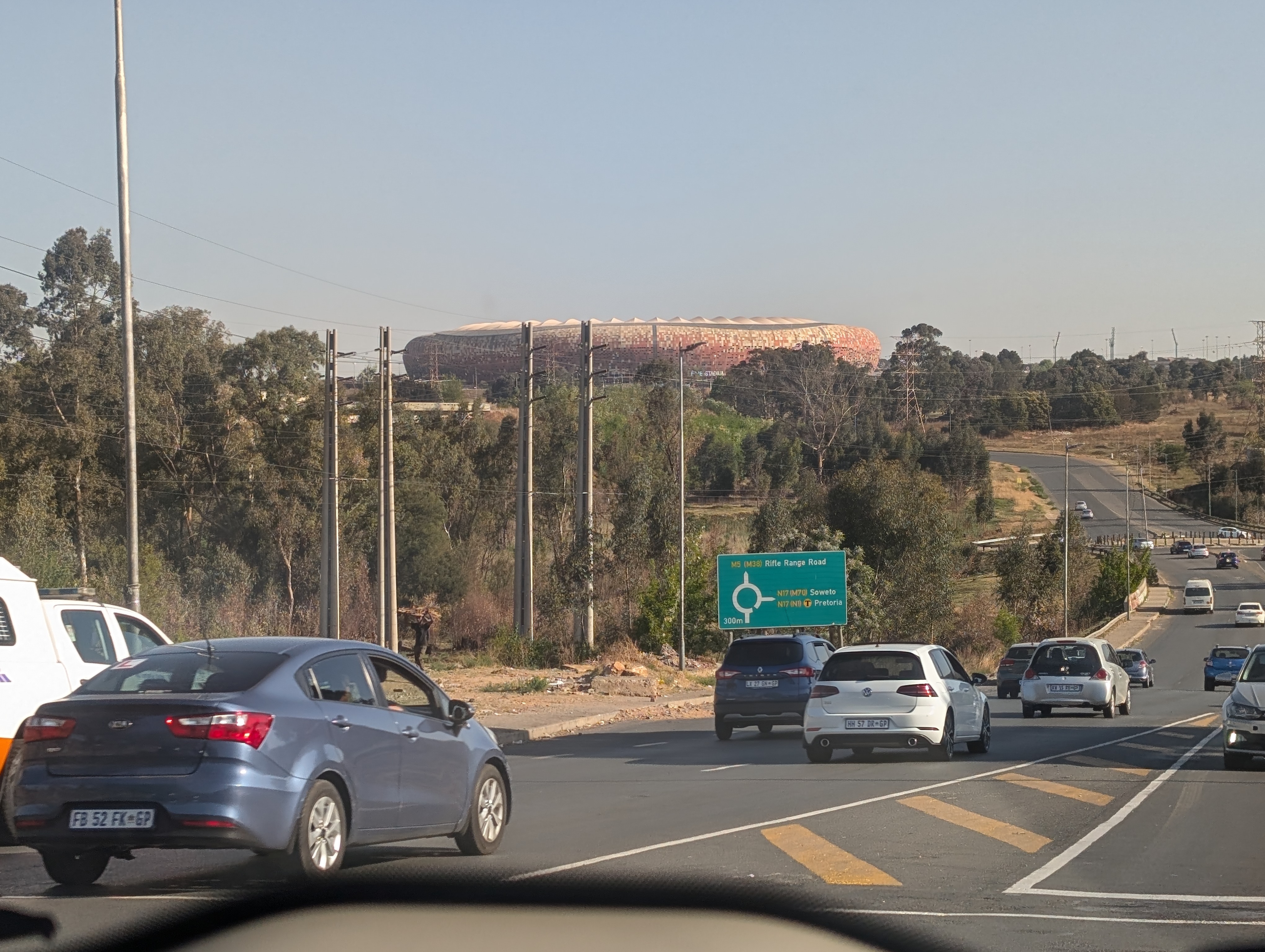
- Johannesburg is the biggest city in South Africa and it is riddled with traffic on it´s roads. It can be stressful driving here but it is possible with patience and flexibility. Clearly, if you drive near or in other big cities, also expect traffic at certain times.
- Each region of South Africa has differences in types of drivers, as you drive around the country you will start noticing these subtle differences. For example, Cape Town drivers felt crazier, Durban felt faster.
- Sign with an S (crossed out) means no stopping
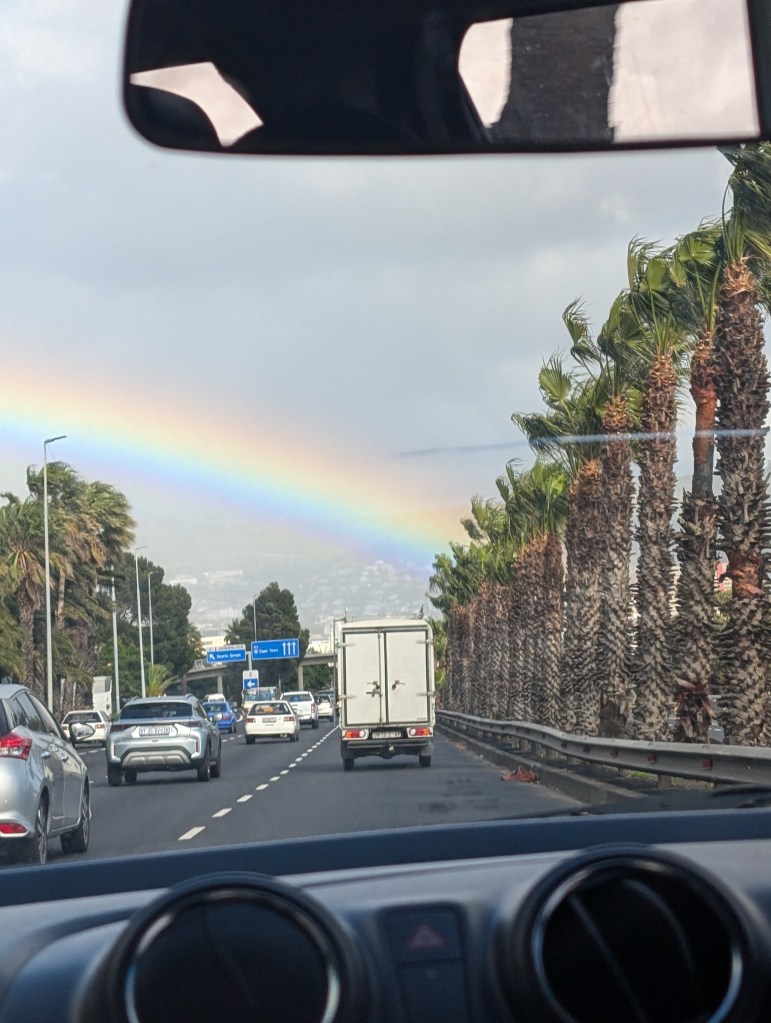


- Night driving is scary. If you must, use high beams whenever possible. There are plenty of people walking along roads, stoplights out, no lights on roads, etc. I do not recommend night driving and I only did it once. I survived but it was hectic for all of the above issues!
- As much as you may want to help it isn’t safe to give people a lift on the side of road. You will see many pointing to hitch a ride, some even with signs regarding their destination. In Lesotho and eSwatini it is overall safer in this sense but still not recommended. I did give two ladies a ride from an infrequently visited border crossing from Lesotho back to the next town an hour away in South Africa and it was fine, they even paid for some gas!
- Radar traps exist and are occasionally done by actual police but otherwise it´s usually by cameras that may or may not function (you will see a sign warning beforehand). Mostly these are found in South Africa and not in Lesotho or eSwatini. Frequently, cameras and police are near well used borders or entering/leaving cities but can also be elsewhere so be aware.
- No self service gas stations in South Africa. Gas station attendants often offer to clean your windows, check tire pressure, etc. It is seen as an important part of their job. Leave a small tip!
- Gas stations generally have stores, fast food, bathrooms, atms, car wash, etc and tend to be safe spots to stop. In general gas stations in South Africa had security and typically are safe (even with random people wandering around or begging). You can always ask if it is safe, they speak English.
- When possible take toll highways, trust me it’s worth it, as other highways might seem fine then turn to rocky dirt roads, very patched or potholed ones or just go through unsafe towns.
Highway Driving
South Africa is a huge country! I didn´t drive everywhere but know the infrastructure is set up to drive great distances. There are many options of long distance travel in South Africa, the most direct ways are via toll highways and non-toll roads. I´d recommend the toll highways whenever possible! Below are some of the differences and reasoning to do so.
Toll Roads
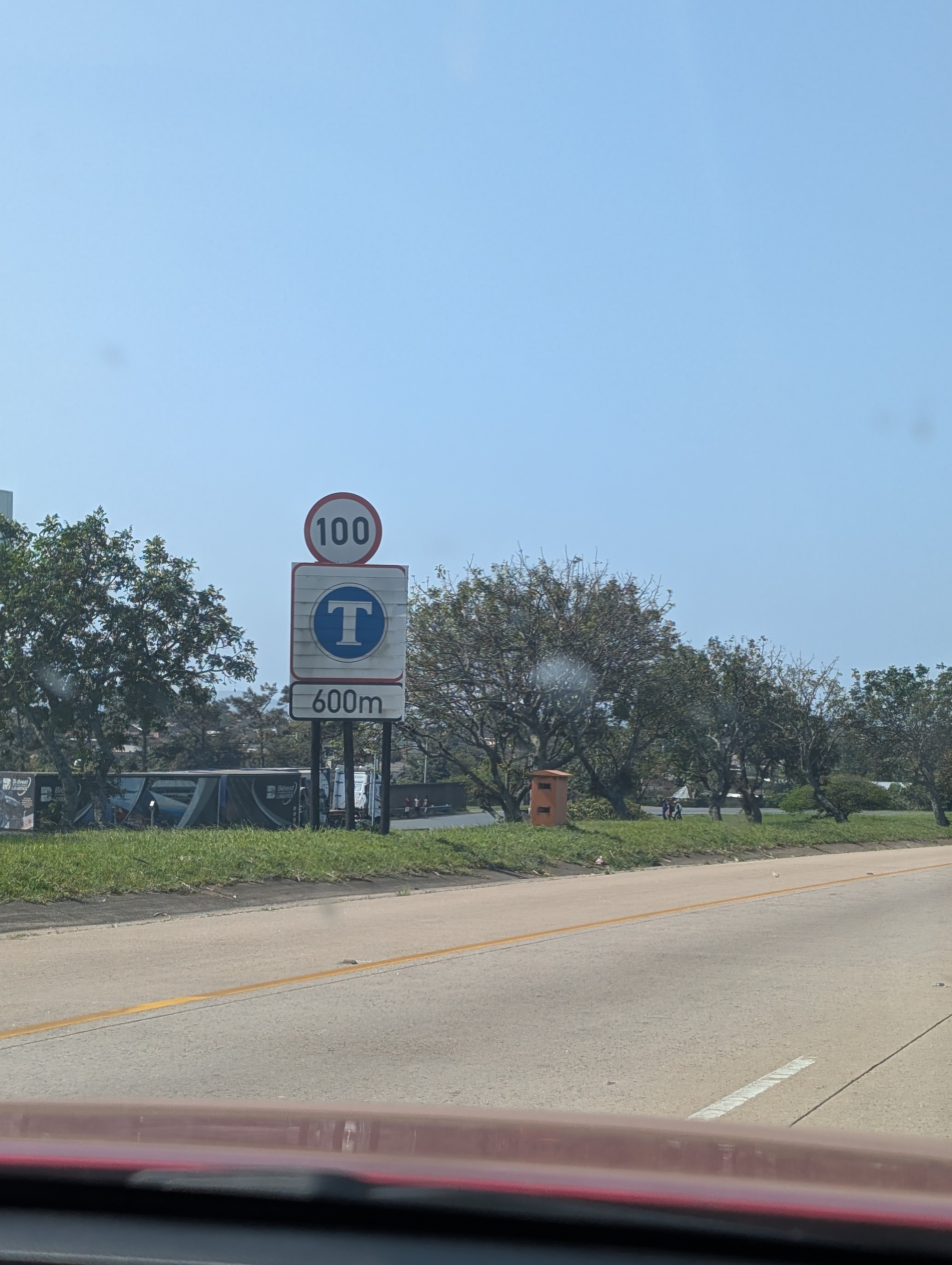
The tolls are basic, you have multiple lanes generally and every once in awhile you pay a fee. They go long distances and get you there faster and they are potentially the safest way.
- Toll highways are pure joy (major appreciation) to drive after seeing all other types of roads but still watch out for people crossing/cattle, etc. Even though they are tolls, they aren’t perfect but way better than other roads!
- You can pay with a pass, cash and sometimes a card. I always had enough cash just in case.
- Drivers here really respect the fast lane (far right) and you should too. If you are not the fastest, move over. The fast lane is often empty because it is the thru-lane and fast traffic! You will notice this especially in cities when it´s not fully rush hour.
- Speed limit is generally 120kmph or 60 mph will feel fast here.
- Toll highways don’t always have a physical (barrier) median, often it is a wider painted line with extra space on each side.
- If needing to turn right on highway to reach destination often you can turn left and turn around to cross…do not stop in right lane to turn, that is the fast lane.
- Toll roads often have very safe gas stations pull offs.
- Cape Town has a bus lane on some highways and they are heavily patrolled by cameras and police at rush hour. After rush hour (hours listed on signs) they open to all traffic. Cars often jump in and skip ahead (including my Uber driver) taking the risk because traffic at those hours is real bad. The airport is 20 minutes away but over an hour at rush hour! Keep that in mind or maybe take the bus!


Non Toll Roads
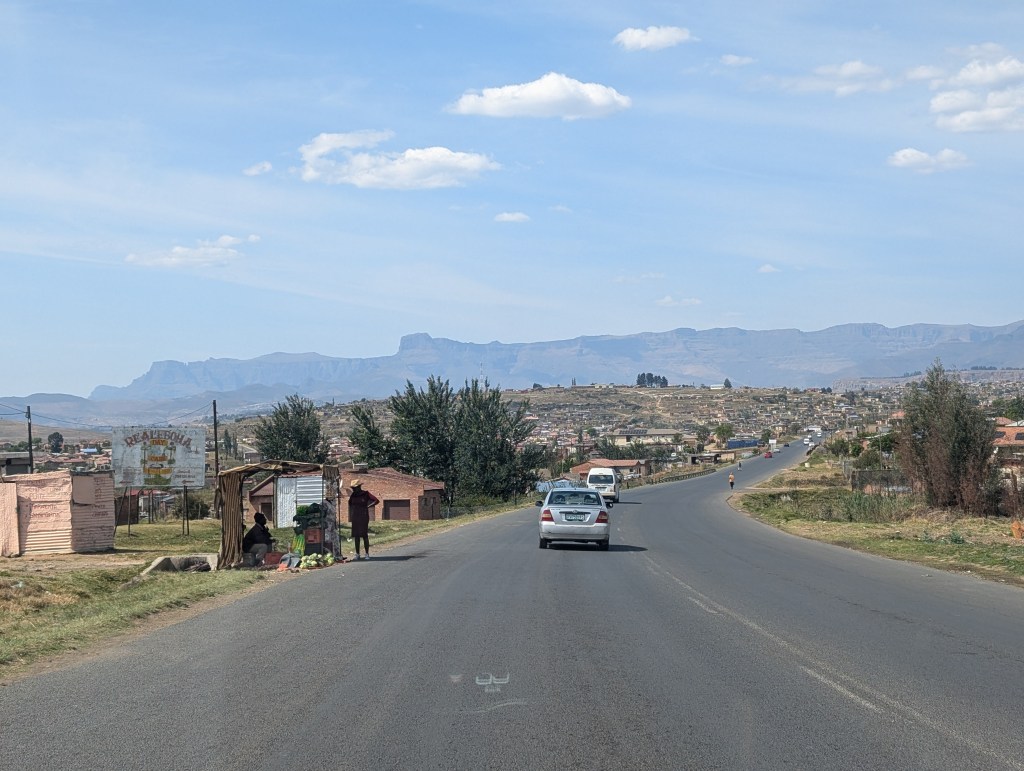
These are long distance roads that get you places, you go fast, generally 1 lane each direction and free to use.
- You will pass a lot of vehicles in South Africa…often you need to pass a lot of trucks on smaller non toll highways. Go anytime you have space to pass and visibly see it as safe (aka no matter the lines). Don’t pass on hills or curves or when going through towns for safety, others mainly obey this general rule too.
- Use shoulder, if good and available, to let others pass or to give space to those passing on the opposite side of road.
- Use 4 ways for a few seconds after passing to say thank you!
- Trucks often use shoulder and are ready for you to pass. When you are trying to pass a truck they may signal by tapping brakes to say you can’t pass or turn on signal to say you can.
- It is not uncommon to pass between two vehicles on either shoulder. Just make sure the other direction doesn´t have some one passing already!
- Use left lane if going slower, or shoulder drive.
- Some highways have 4 way stops at intersections. Often these intersections are indicated with a random stop sign that might catch you off guard (another reason to always be focused when driving)! Usually these are common near cities or larger populations. If intersection is clear, go slow but proceed. If cars approaching, slow to a stop then proceed at your turn. If too many cars and lanes, slow as if stopping and slowly creep thru until obvious it is your turn. If these have signs for crime, spend as little time as possible there!
- Construction areas are very active on roadways but you won’t find many drivers going the speed limit and you will often still have drivers passing. Remember you are driving on left side so you should stop at the barrier on the left side until the yellow GO sign is given. The first time I went right around it and didn’t even realize I had to stop for my turn and cars were starting to come though on the other side…oops! Use common sense and caution but follow what locals do. I feel really bad for the safety of workers here but sometimes you will see them dancing. Also, trust me, you will be very happy to see the sign saying “End, thank you”!


Non toll road speeds can be good too 😀


Differences by Country
To use a vehicle in other countries you need to pay a road tax, it is around 60-100R (3-5 USD) and paid at the border. In addition, you need the letter from the rental agency granting permission and the car´s registration certificate. When possible try to pick the less common border crossings (generally not near the capital city) to avoid long wait times.
Lesotho
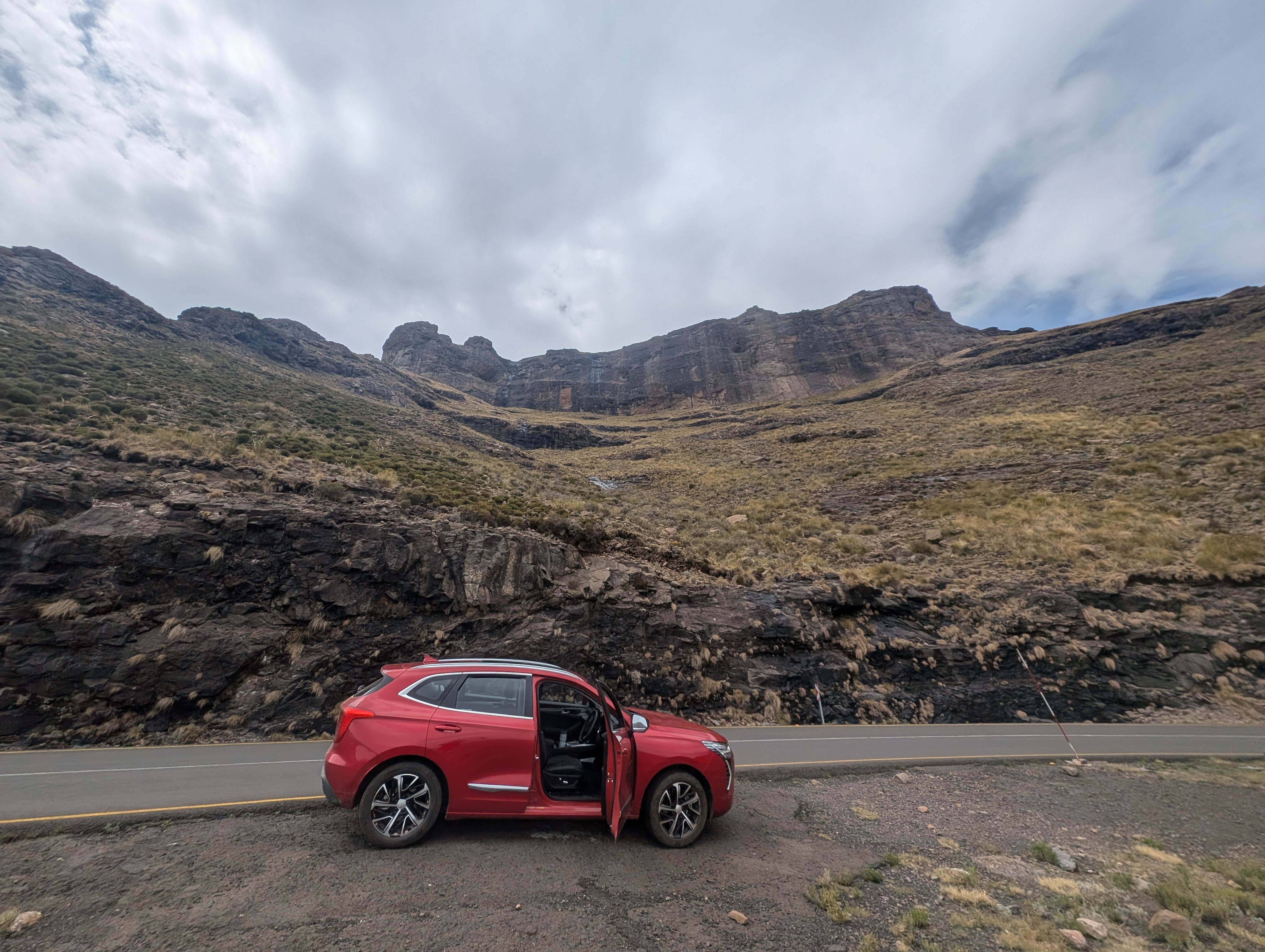
Had to stop because it was beautiful! 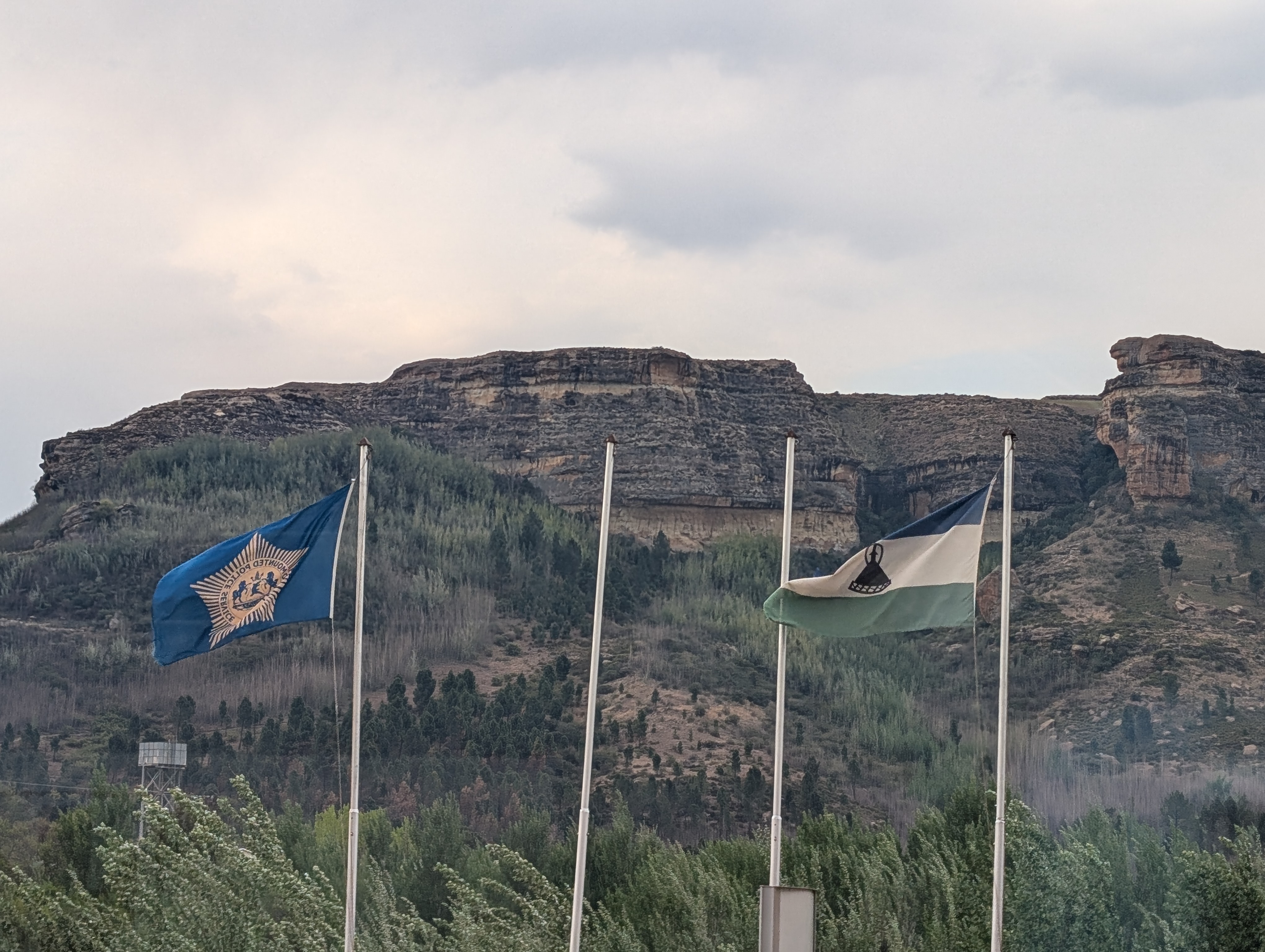
Entry into Lesotho 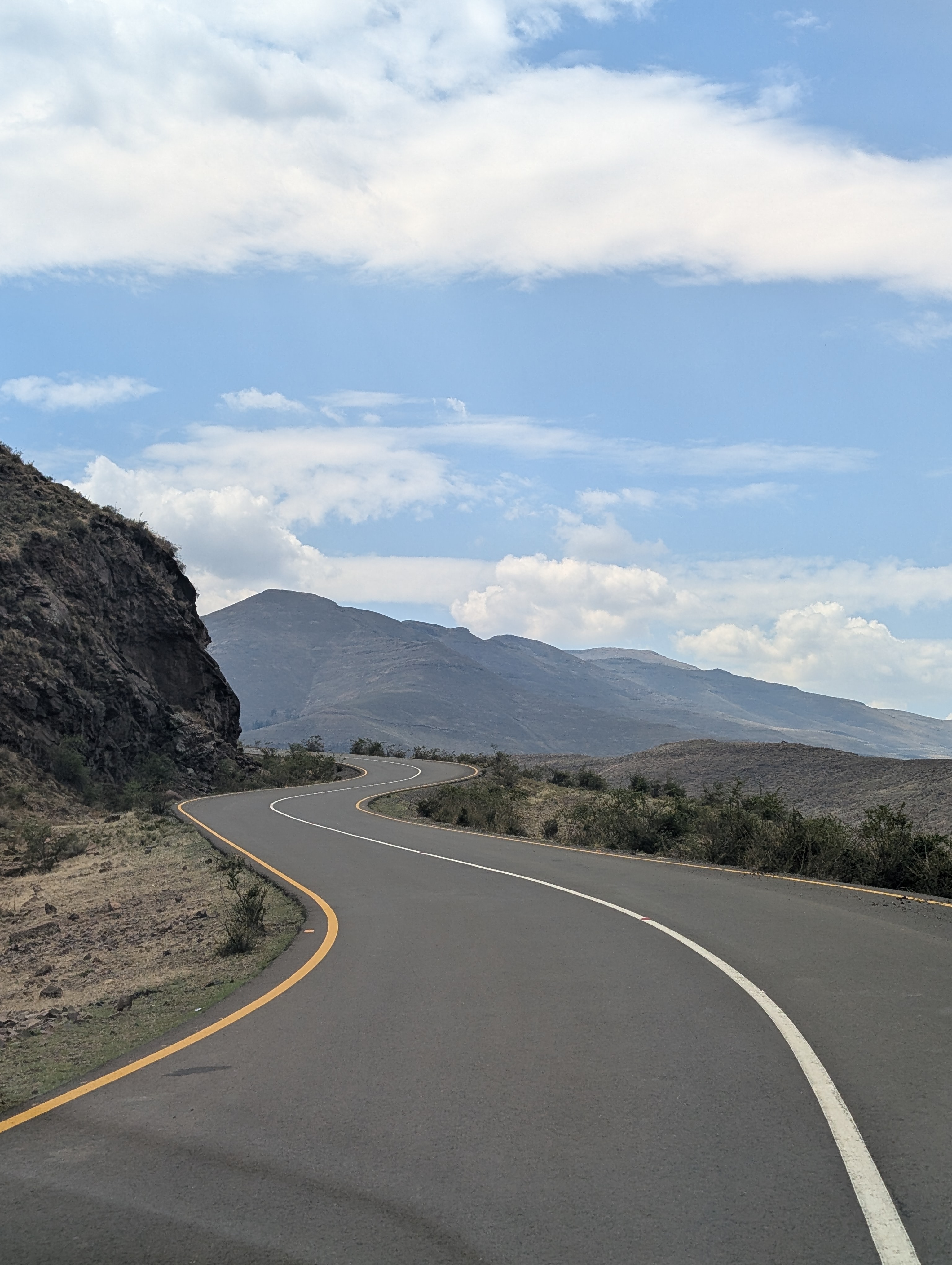
Curvy, winding roads galore 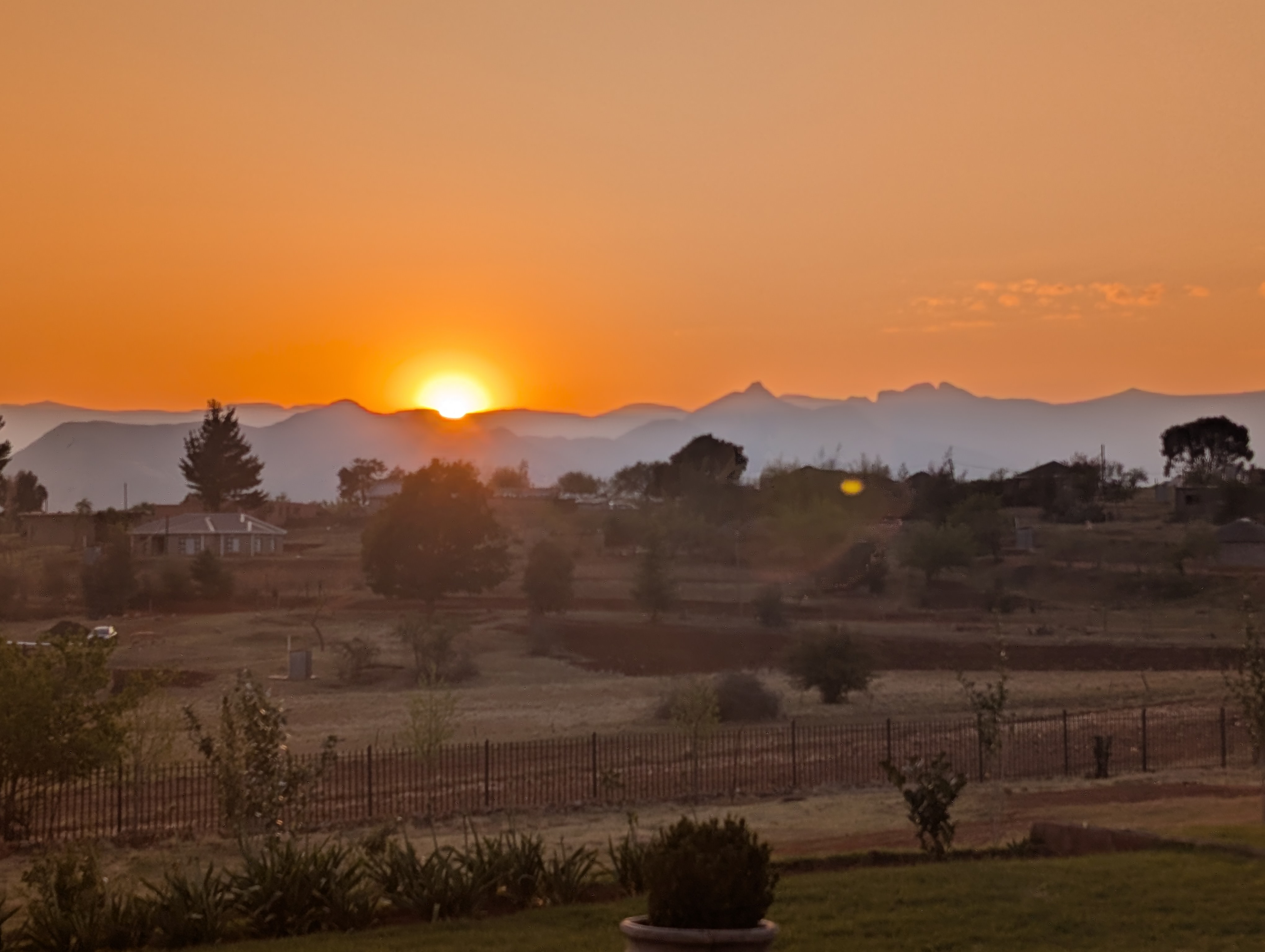
Lesotho is called the Kingdom in the Sky and it sure delivers! 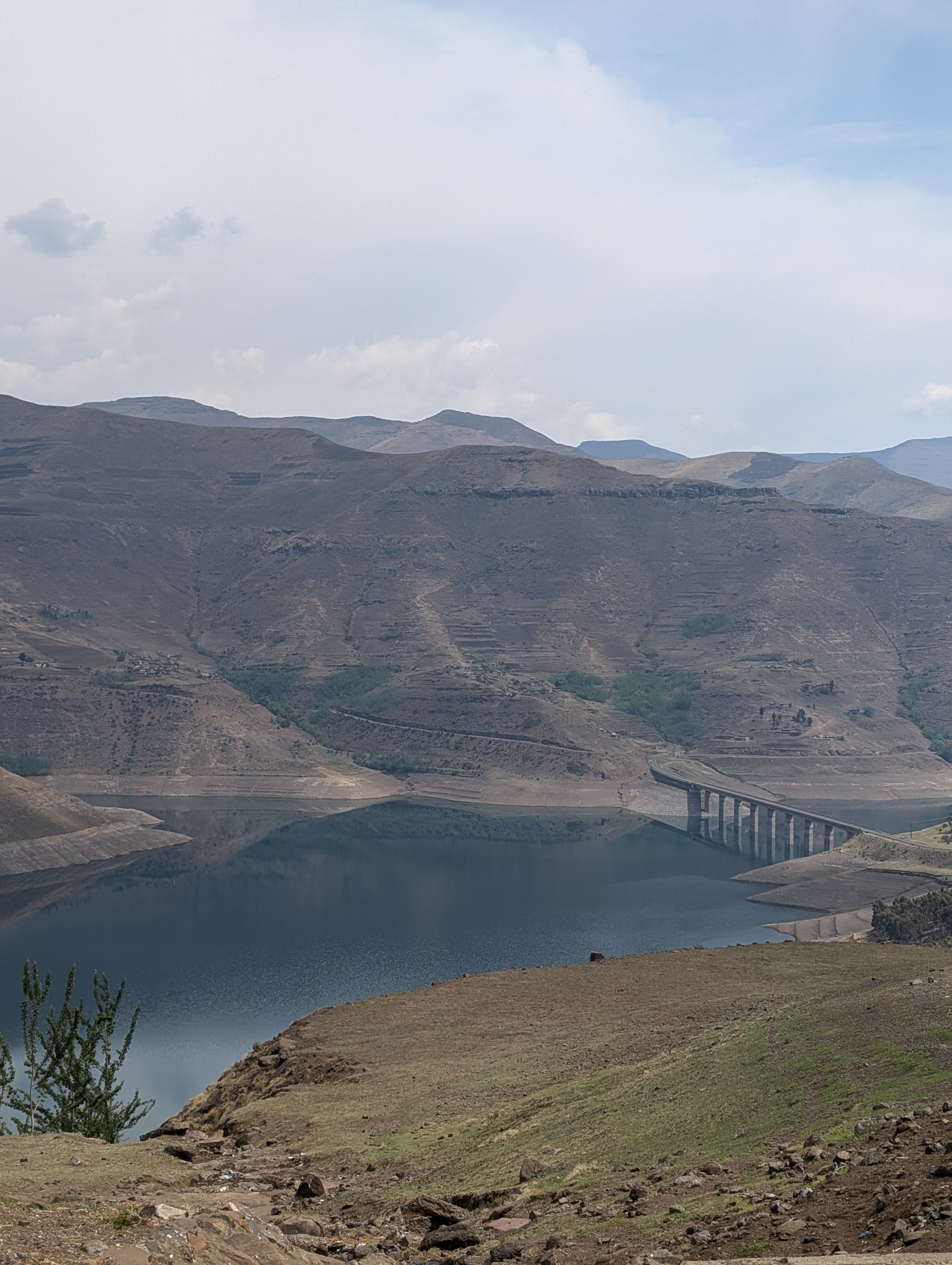
Number one export is water for Lesotho. Route toward the Katse Damn (2nd largest in Africa) 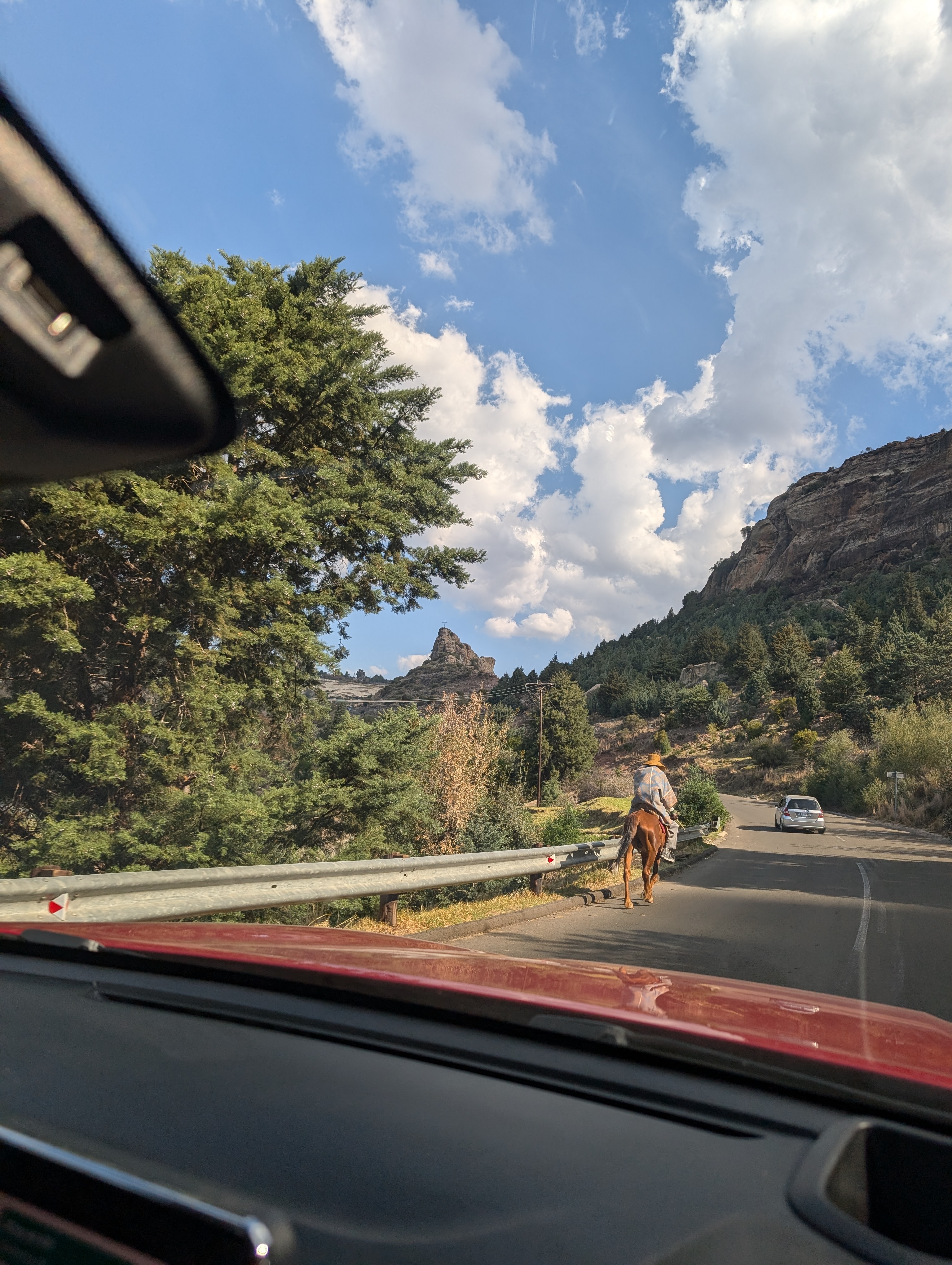
Such beauty outside of Roma 
Qiloane Hill – famous Lesotho symbol 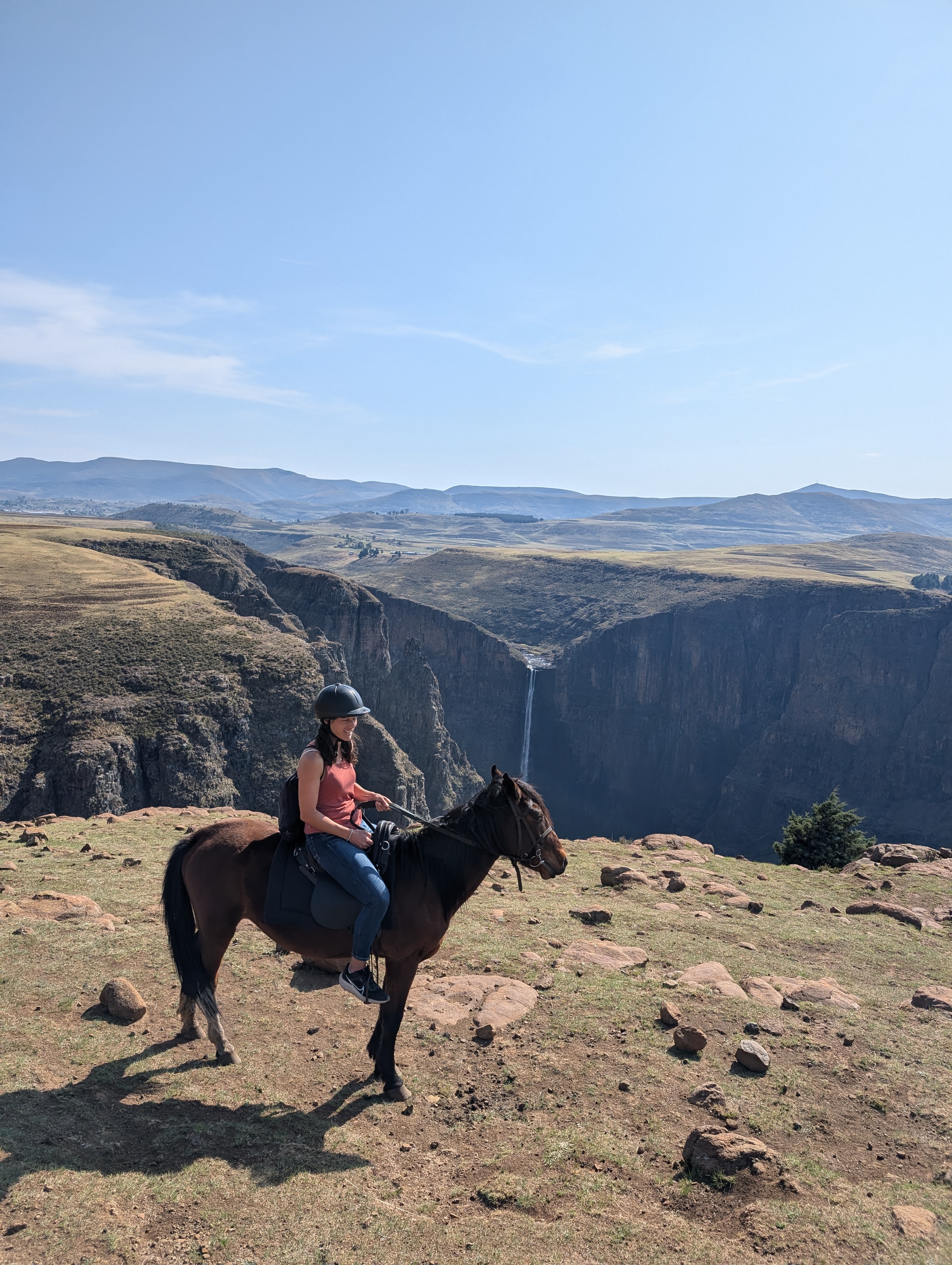
Trying out Lesotho´s #1 transport 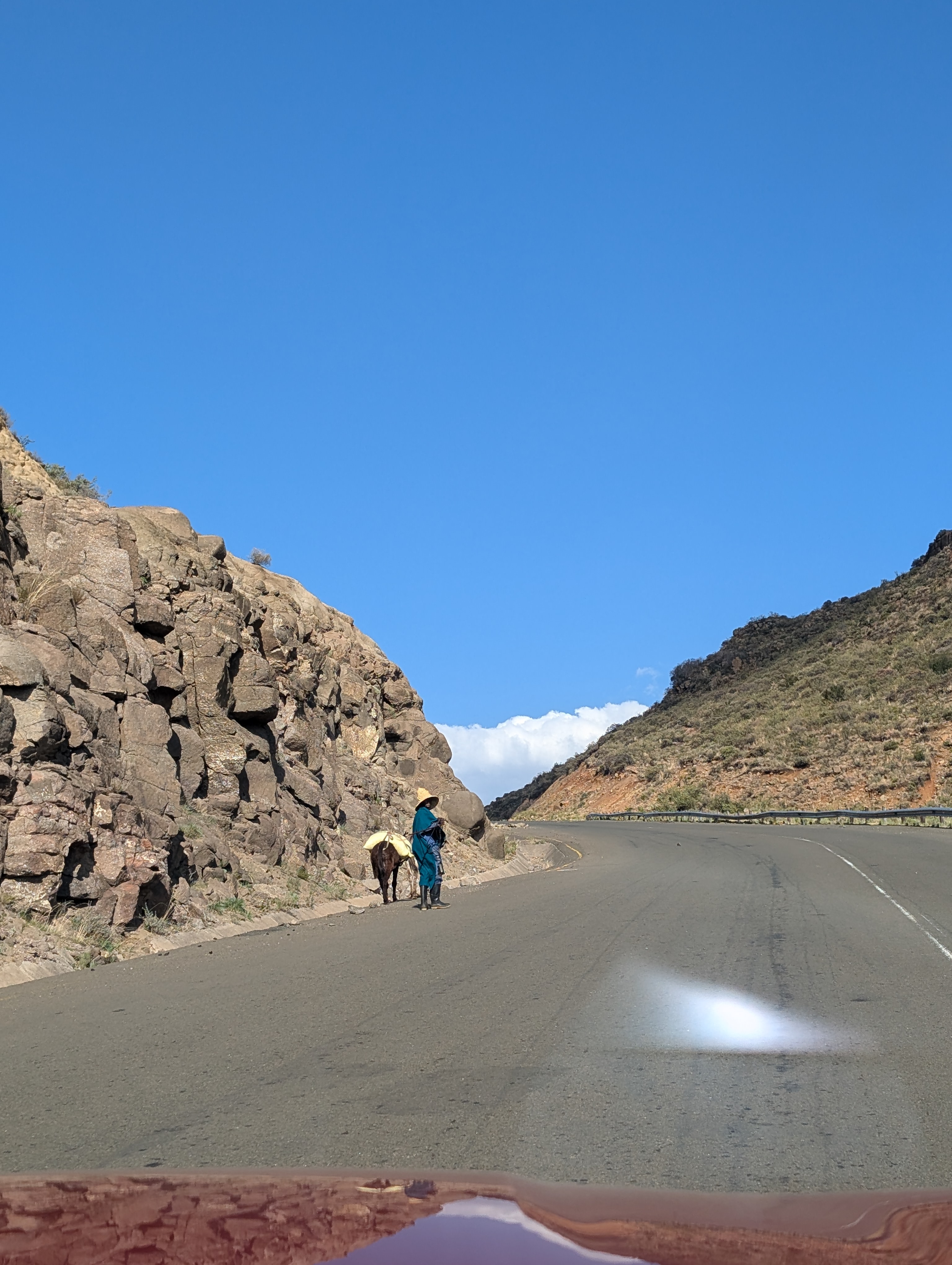
Steep inclines…damn, why didn´t I get gas? 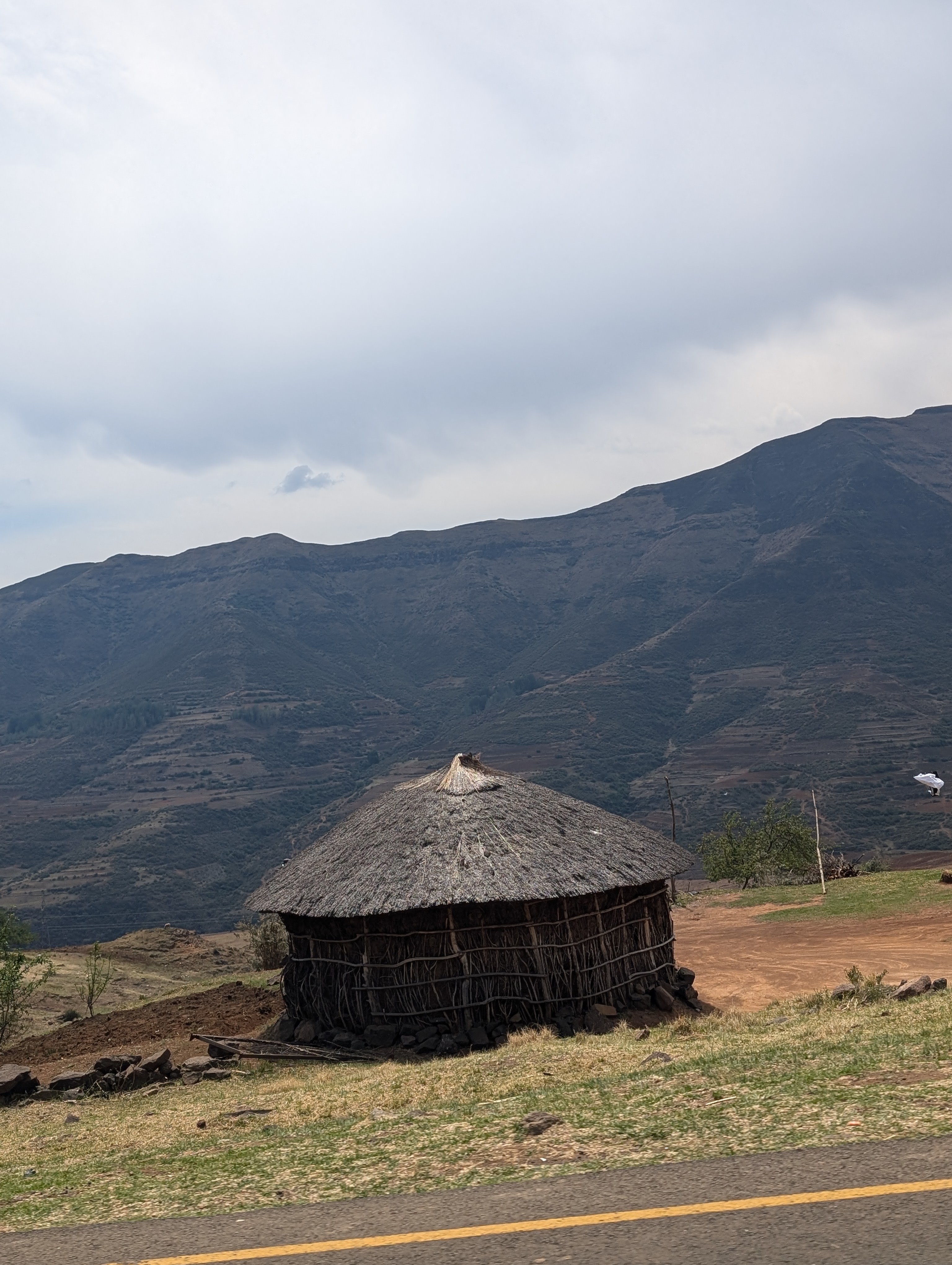
Typical houses in the mountains 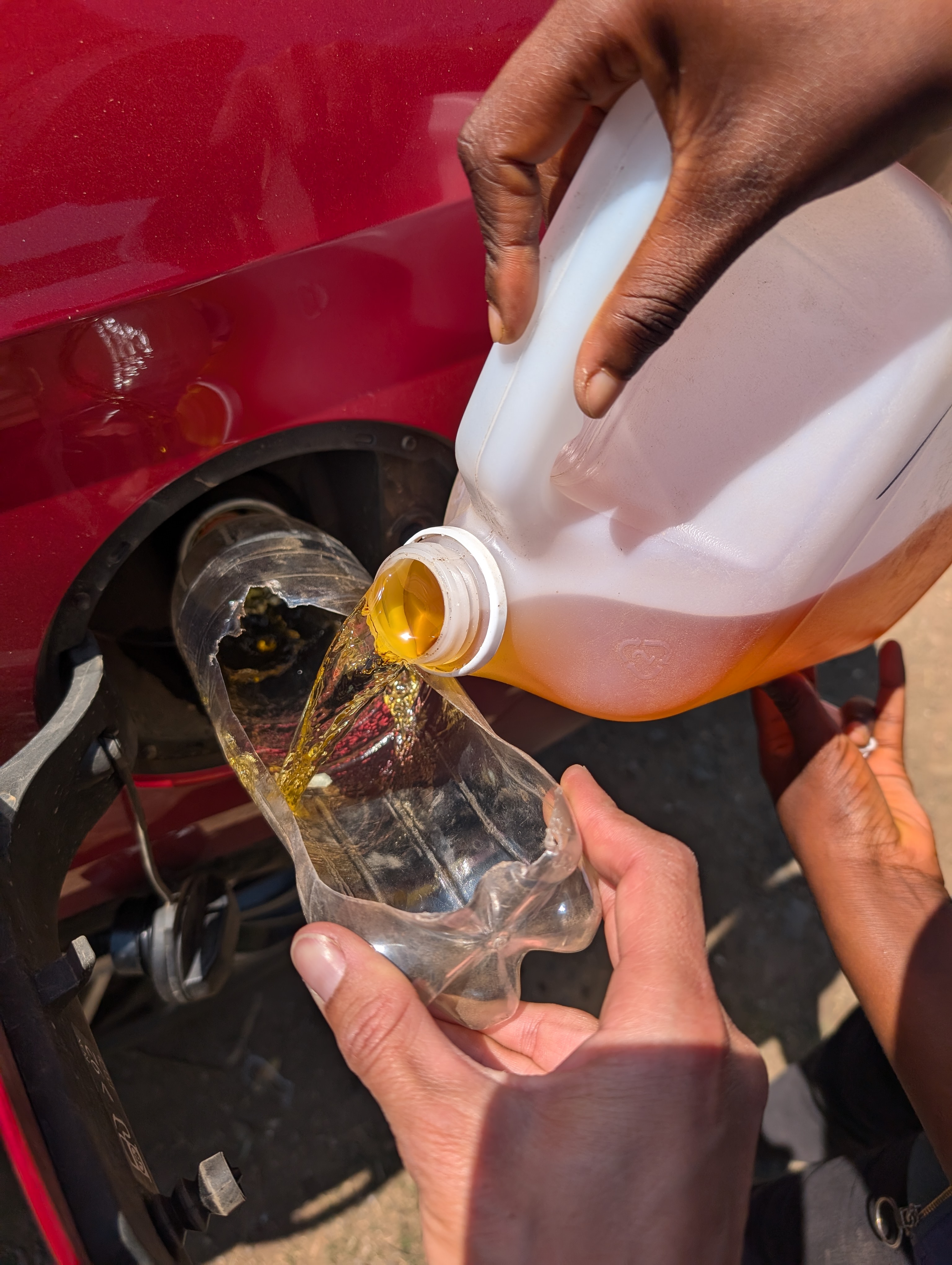
When you run out of gas…buy it by the liter 
Small town gas pump….empty on Friday 😦 
Maseru (capital) roundabout 
Views when you can´t stop!
- Roads are sub par, not a lot of shoulder area if at all (often broken)
- People are always walking on shoulder area (usually they are aware of vehicles and move over because really not much of a shoulder)
- Plenty of pot holes! Go around them all, they are deep!
- Get gas at half tank always or if planning to drive far or outside the few main cities! You likely will not see a gas station or a pump for many kms.
- Get gas before Fridays as many travel this day and pump might be completely out by 10 am, especially in small towns. If really needing gas, ask around, often an entrepreneur likely bought extra liters and you can buy off them.
- Don´t hesitate to fill up when you see a station when you have any worry about when the next gas station will appear!
- Note, high altitude means less oxygen and gas goes quicker here.
- Dirt roads are common, go slow, they are rocky and not the best.
- Lots of mountains to climb here so 90km likely takes 2 hours. (topographic map). This was a half tank of gas for my car.
- Drivers go slower here than in South Africa, given the roads, you should too.
- It´s curious to find that the number one form of transit in Lesotho is by horse!
- More information about driving in Lesotho
eSwatini
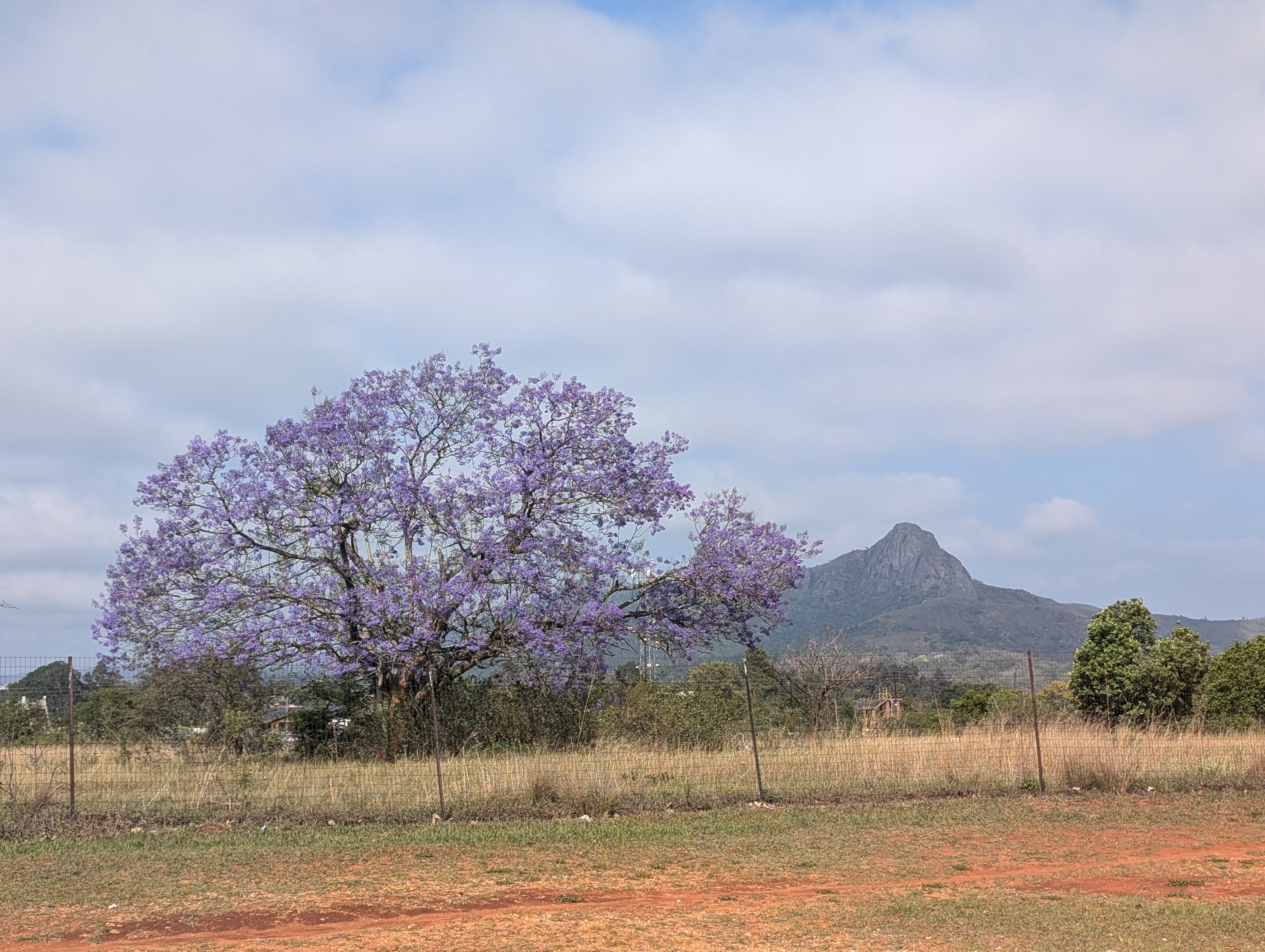
Jacaranda trees in bloom were a real treat, and maybe an obsession 😀 
Coolest flag? 
Hiking was wonderful. Look at these views! 
eSwatini Parliment was for me exciting to find. 
Main roadway views 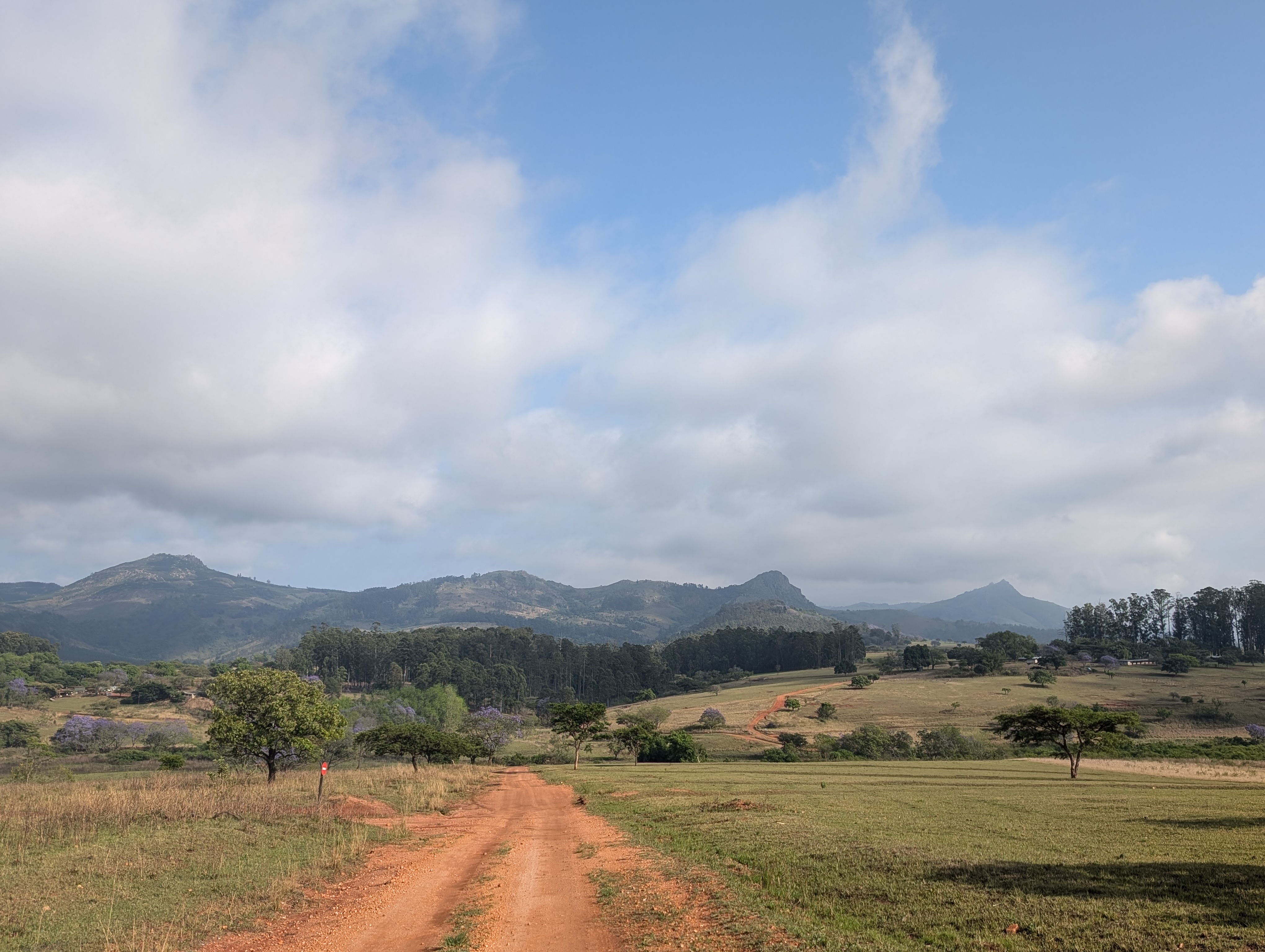
Game reserve roads. Loved my stay at Mantenga! 
More early spring green mountain views! 
I often take photos of license plates…just sharing. 
Driving into Mbabane (capital)
- Roads are similar to South Africa in that they are mainly tarred and have descent shoulders but there are obviously dirt roads and bumps here too.
- It is not as hilly as neighboring nations.
- Note, there are a lot more cattle crossing roadways here. I heard elephants used to cross as well but they were moved to nature preserves and away from the dense areas to avoid issues with cars.
- eSwatini is small, can cross the whole country within a few hours
- Sometimes it is best to navigate using GPS coordinates!
Specific location learnings:
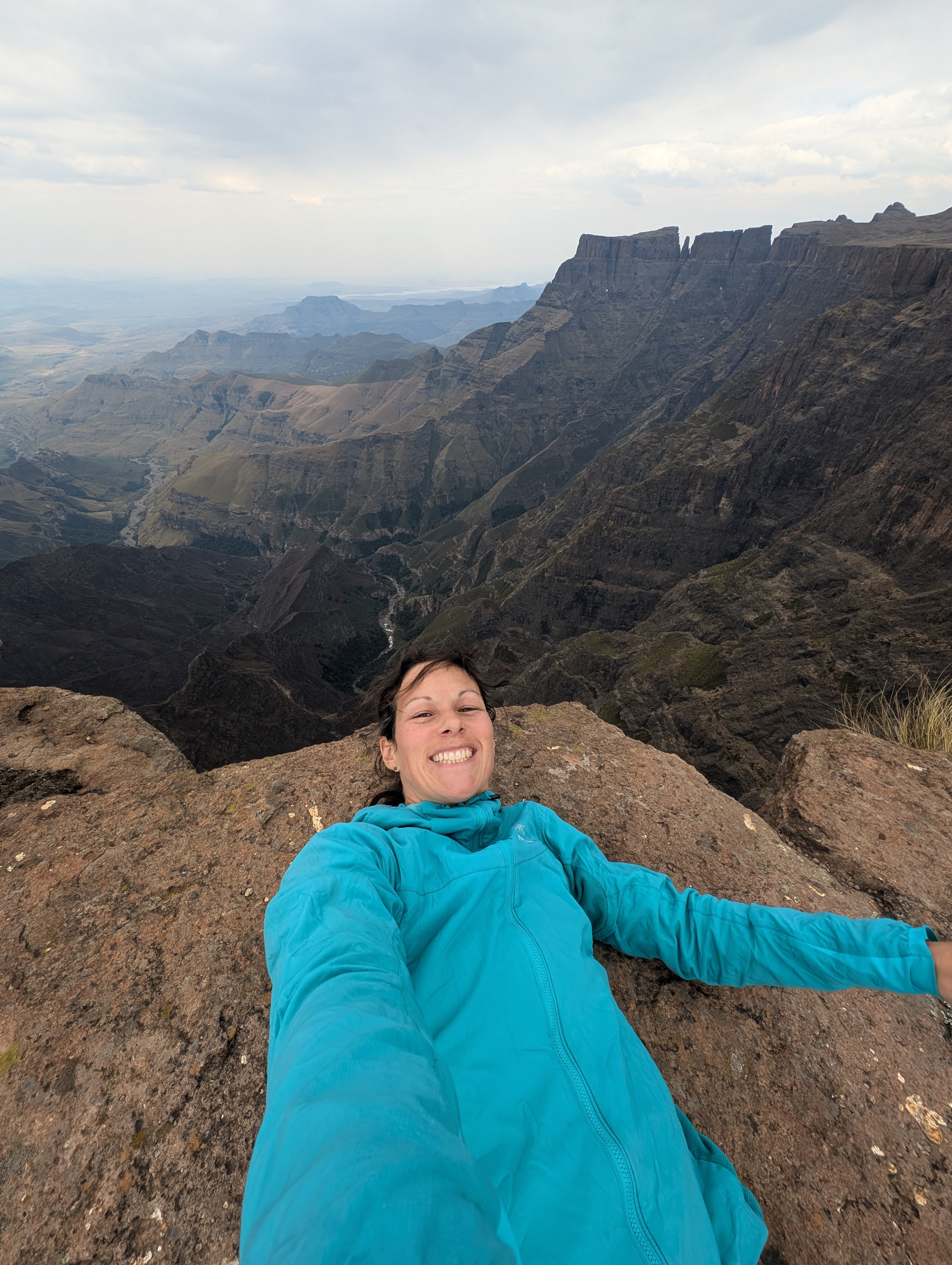
Drakensberg: You need a 4×4 in some sections but often you can pay to get a ride. For example to reach Sentinal Peak Hike, the Witsieshoek Lodge offers transport. The lodge also has dorm options for cheap if you need to stay, otherwise many stay at Amphitheater Backpackers. I found it dumb they have a road and half of it isn’t fixed only because they don’t want to lose money on transporting tourists…well and maybe parking…
Self Drive Safari: Generally you can go to most parks with any car, though some require 4×4 and some do not even allow self drives (research the ones you´re interested in first!). The most famous and popular one, Kruger National Park, does allow self drives. Be aware that you need to drive slow, like 35 kmph and you pay an extra fee per vehicle. If an elephant is near the road slow down or fully stop. If a rhinoceros is near the road, back up, especially if it approaches the vehicle!
City driving: Avoid if you can but if you must use Google Maps and have patience. If you roll through downtown, keep windows up, doors locked and valuables down (phone). Know where you are headed and ask to make sure it is a safe neighborhood. For example in Johannesburg safe neighborhoods are only a few blocks usually and here you generally find cameras, security personnel, lighting and parking attendants (may not be official but still). After those few blocks though it might not be safe and you will probably notice. The rest of the driving tips exist here, street lights might be out, blocks might not be lit, avoid potholes/rocks/etc, avoid stopping for too long and be paying attention to everything around you as drivers do weird stuff.


Useful information when not driving:
- Uber works well in South Africa
- Taxi (the word) is in reference to the minibus (generally not super safe, especially in big cities). Not safe because I hear the mafia owns them and drivers go fast to make money for themselves on top of mafia collection cost. I did take several for a short distance and I also saw a pretty horrific accident. Called a Kombi in eSwatini. You get on them by pointing; down for local area travel, up for long distance. To get off in South Africa say short lift; in Lesotho say Emma.
- 4×1 is name of the shared taxi (looks like actual taxi car)
- Cape Town has trains (the safest one to use is the one to Boulder Beach aka Simon´s Town – Info here) and a great, safe bus system called myciti bus. Myciti bus pass: 35R to get card, charge at Spar, Absa bank atms, sunset pharmacy, myciti office, etc – Tap on/off (point system) and ride, it´s safe, frequent and goes all around Cape Town!
- Johannesburg has a light rail (airport to downtown, Sandton and Pretoria) Train Info
- Long distance bus companies are InterCape (book online in advance, they do sell out) or Golden Arrow (from Cape Town mainly)
More info on driving in South Africa or here
4×4 camper rental Berg rentals
Other blog on South Africa
If you want to receive new blog posts about travel and sports please subscribe below!


it’s always nice to read your travels! 😃 hugs from afar
LikeLiked by 1 person
like all the social determinants of the existence of their driving environment . Liked the photos of the swatini Parliament, beauty outside, Roma, kingdom of the sky and game in transit.
LikeLike
Good read Tarae, but I think I will pass on visiting any of the places you went or mention. Driving on the opposite side of the road is a non starter for me. I have enough trouble driving on the side I’m suppose to be on here. Thanks for sharing. I’d like to see a slide show of travel when you have time.
Dad.
LikeLike