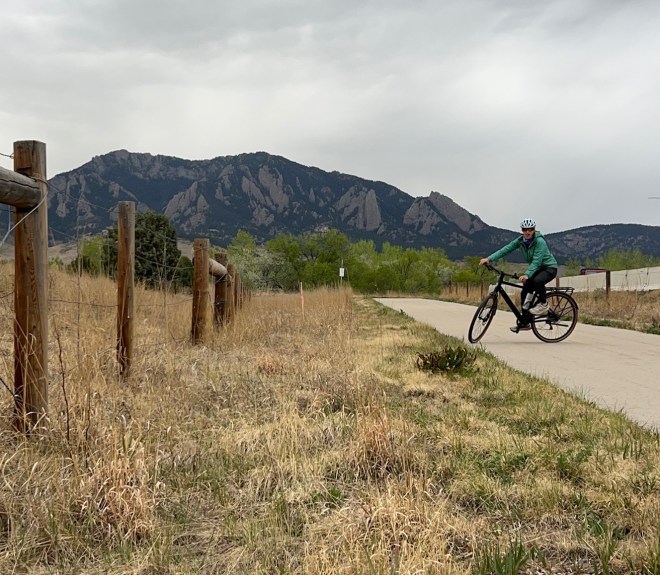
I recently got my first E-Bike (ebike). I’d tried several like the Rad bikes before when I worked as a bike tour guide in Seattle and I tried a Trek on a pet sit that I really enjoyed! In my quest to find an e-bike suiting my needs I learned a lot about ebikes and specifically which type was best for my current needs. I´ve highlighted some of the many factors to consider when looking to buy an e-bike for yourself and that fits your needs.
I test rode a few different brands and types of ebikes at various stores. In my research I narrowed my needs in an e-bike down to the following:
- An e-bike for commuting,
- With a removeable battery,
- Class 1 was fine for me,
- Fairly light weight (I´ve got to carry it up 2 flights of stairs),
- Not too expensive since I will lock it outside overnight and if it goes bye-bye I won´t be mad about it and
- With sport mode (pedal assist) because I still want it to feel like a real bike and that I get a bit of a workout.
There are more things I considered and researched which I detailed below but in general it really helped to test some different brands and models out (flat and hilly roads). At the bottom I will leave my review of the Ride 1UP Roadster V3 that I eventually purchased.
Below are the things to consider before purchasing an E-bike:
Types of E-bikes:
- Commuter is just to get around town quicker
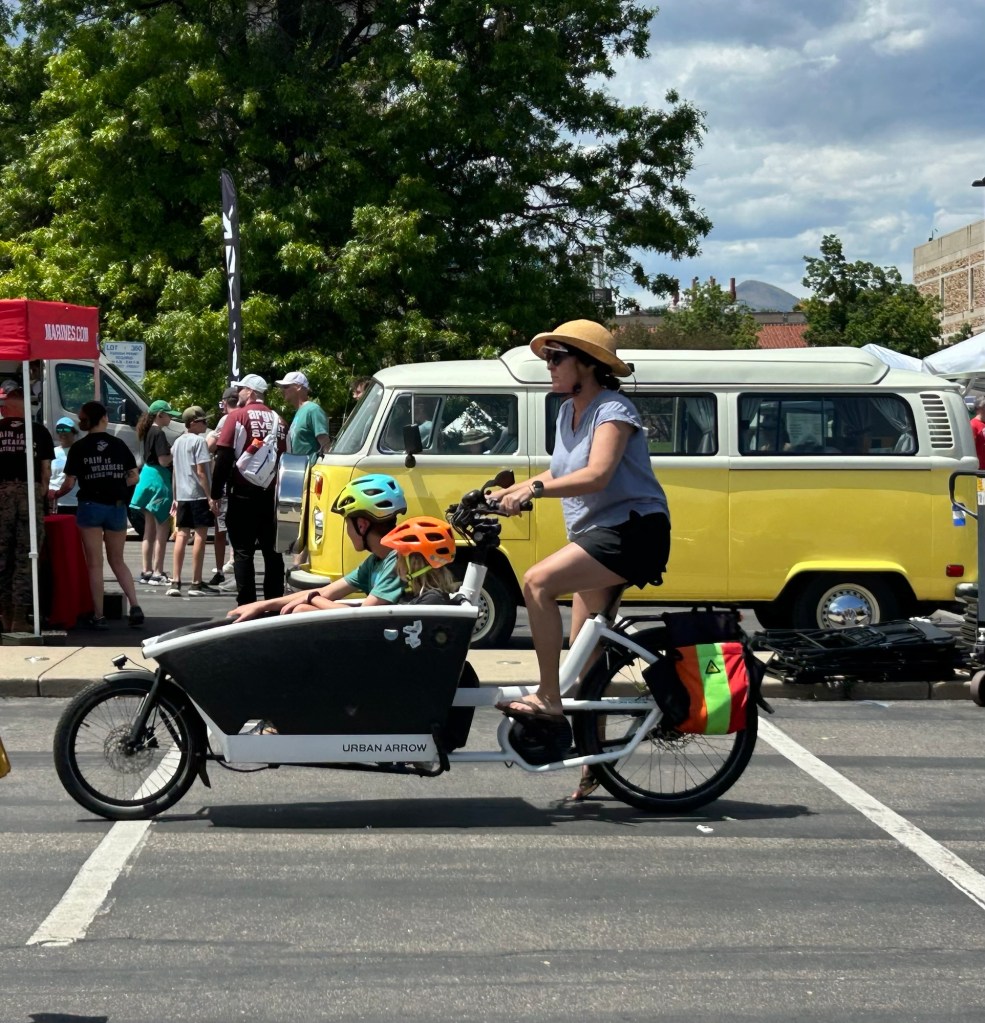
- Cargo to carry stuff (even a sofa lol) but are much heavier bikes (60-170 lbs.)
- Fat tire has thick tires (3-5 in.) good for stability and traction (think sand, snow)
- Folding (obviously for easy transport – subway or travelers – vanlife)
- Mountain to get more easily up the mountain so you can enjoy the downhill!
- Battery added (to any bike)
Categories for E-bikes:
- Class 1 (up to 20 mph with pedal assist)
- Class 2 (20 mph with throttle – no need to pedal)
- Class 3 (up to 28 mph with pedal assist and throttle)
Some categories are illegal in certain states. Check local laws before purchasing.
Terms to know:
Throttle is like the boost button, which is great for starting out from a stop (like a street light). You don´t pedal just push/turn to go.
Pedal Assist (Sport Mode) – is essentially a helper from the motor when you pedal. The harder you pedal the more power assist it provides. This is good for those who want to have the feel like a regular bike but without all the effort.
Full e-bike – no pedal and it runs basically like a motorbike but on electric charge at lower speeds. Many kids on the streets these day seem to have these types.
Gears
Ebikes with gears are more like regular bikes and you can match your pedal power to the speed of your legs by changing the gears. Having gears allows you to use human power while the bike matches it with assist…aka shift to a harder gear to gain resistance and increase speed. Basically if you want to exercise, make sure the bike has enough gears!
The range is different on all bikes. Some hardly have any gears and if you want to pedal faster you wont get enough tension and you end up pedaling for nothing…aka ghost pedaling or spinning out.
Chain
Most come with the typical metal chain that you lube and change every now and then but some have a rubber belt which is low maintenance and gets upward of 7000 miles or more before you need to replace it. It is not a common part so down side on the belt is if they stop using them for ebikes then it will be hard to get parts.
Lights
All bikes have lights, some have bigger or smaller ones. Lights that turn on automatically while others require that you turn them on. Also some have blinkers to signal your direction and emphasize when you brake…but not all bikes have these features.
Extra features:
Built in alarm and tracking.
USB Charging.
Battery
There are two battery types: removable and internal.
Can last 3-5 years (500-800 full charges), cost is about $300 for replacement. 360Wh capacity for Ride1Up
Also note that extreme heat, highs of 100F (42C), and extreme lows, lower than 30F (0C), do affect the battery. Too hot and it can damage the battery and age it quicker. Too low and the battery percent will drop quicker (less range or distance for the charge). For both, do not charge the battery right after exposure to high temperatures. If you leave it outside for long periods in these temps, it is best to remove the battery and keep it inside (if that is an option).
Batteries have levels, these levels determine the range (distance) and power:
- Entry level has a 36V, 10Ah (360Wh) battery (20-50 miles) which is generally common for city riding. Entry level is what I bought and it feels like plenty of power but sometimes it lacks the assisted boost, like on hills…lucky for me I´m not trying to really speed up them, just transport myself.
- Mid level has about 500Wh battery (40-75 miles) and is common for more hilly commutes with a variety of terrain.
- High level starts with a 750Wh battery and is considered long range (60-100+). High level is common on cargo bikes (heavy loads) or very steep hill riding (MTB).
Mileage though I have found to be more depending on how much of the battery you use, for instance, I coast down hills without battery.
This is all subject to some factors listed below so be aware of them when riding and keep track of usage your first full battery, every bike is different!
Things affecting power:
- Wind
As a headwind this takes more power and will reduce your battery charge quicker.
- Hill
All hills take more power from the battery. I highly recommend you test ride an ebike on a hill before purchase because hills affect the ebikes and the speed up them really varies by bike.
- Weight of rider
A 250 lb plus rider will experience more power output to get you to your destinations. Using higher power modes are significantly effected.
Motor
There are two types, hub (rear wheel seems most common) and mid drive.
- Mid drive motors are great for climbing hills and also a much easier flat tire to fix as they aren´t placed between the wheels like a hub motor.
- Hub motors are usually cheaper and easier to maintain so they are found on the commuter bikes often. Cargo and Mountain Bikes likely have a mid drive motor.*
*Interesting bit on hub motors is if the chain breaks the motor will still get you somewhere…
Weight
The lighter bikes are at over 30 lbs while a great majority are upwards of 60 lbs or more.
Rebates
States offer rebates on newly (not used) purchased ebikes at specific retailers. Many offer two types, a generic $200-$300 off and a larger sum special one for lower income qualifiers ($900 and up). This varies by state so definitely look into it. You often need to apply to the program yearly to get the rebate.
Costs
Expected cost for the general public when looking to buy an e-bike is about $1000 to $6000. This cost generally gets you a decent e-bike. If you want more power or specific types of bikes, for instance, a high tech mountain e-bike or with more upgrades, they go up well past $10,000.
How E-bikes compare to regular bike?
Depends on the ebike and how you use it but if you get pedal assist with gears, it is almost the same workout. An ebike saves a bit more time but the biggest benefit is that it saves effort. You can maintain speed without all the extra hard effort.
What else to consider?
Often reviews of ebikes online mention superficial things about a bike that aren´t great, like the seat, handle bars or screens. If it is something you can change, like a seat, than these are fine. If it’s something you can not change and it’s important for you like screen size and readability then it might not be the right bike for you.
Sizing is also tricky, sometimes a small is too big or even too small and you need to size up or down. It really depends on the brand and even the model.
Top tube between the handle bars and seat is also related to sizing and sometimes the drop down tube (step-through) is just easier to get on. Especially if you are commuting or maybe if you are older, it’s important to pay attention. Sometimes bike sizing changes the top tube too, for instance, a small size has a drop down top tube but the other sizes have a normal top tube.
REVIEW OF RIDE1UP ROADSTER V3
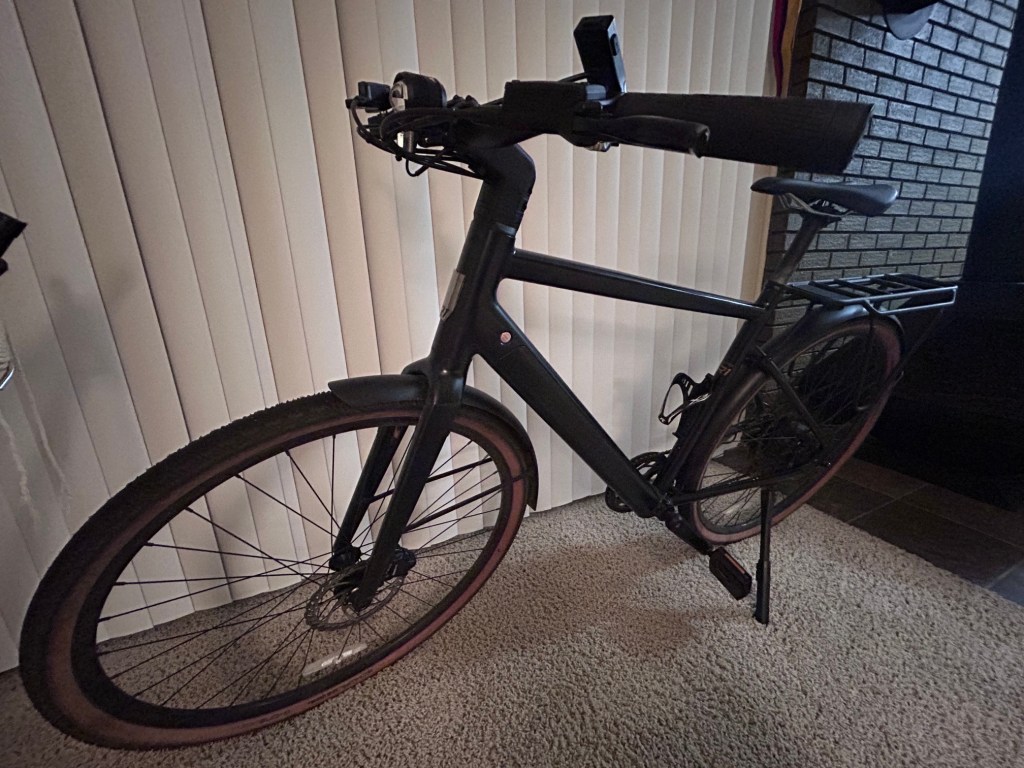
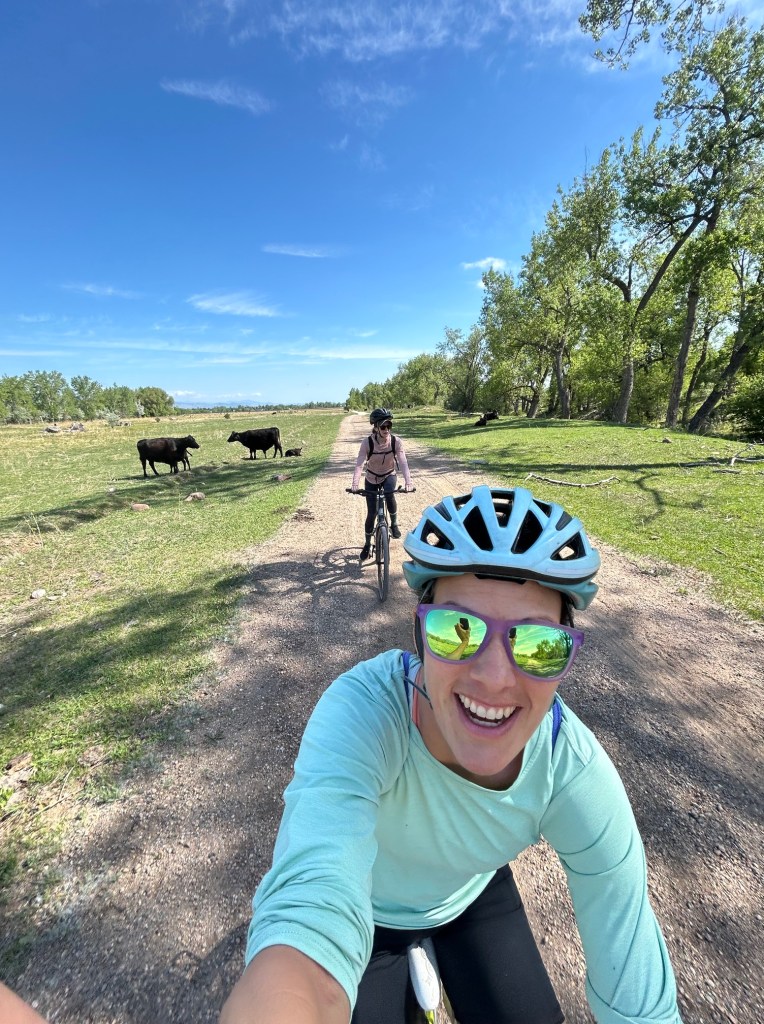
I´ve been quite happy with my new Ride1Up Roadster V3 e-bike the last few months. I love that I can still get some health benefits to get places but not feel as tired or sweaty. I sometimes save time (I can bike pretty fast on the regular bike, ha, it´s been entertaining for me to try to beat the ebike times on routes), depending on the route and how much power assist I add. Lastly, I love that friends can use it, keep up with me, are not fatigued and are very happy to cycle and keep cycling with me!
I test rode quite a few bikes over a couple of weeks at various bike stores (some e-bike specific) and randomly found this brand with an internet search. Ride1Up is a brand sold mainly online so I found a local distributor in the area that carries it and went for a test ride. It seemed to have most things I was looking for: It´s a commuter style e-bike, the price is close to $1000, it has a removable battery, it´s decently lightweight, has the pedal assist/sport mode and although I wasn´t looking the following features, it happens to be Class 3 (20 mph is plenty fast; Class 3 does 28 mph!) with a throttle.
I highly recommend test riding any ebikes before purchasing (if possible)! Test riding them really helped me narrow down what type of bike I really wanted and what aspects I didn’t like or did need from trying comparable bikes. When I tried them I realized how important gears were and how different the variety of motors felt. I began to eliminate certain models very quickly! Plus, I have heard stories of friends parents going out and buying an ebike without researching or trying it and later finding that it´s too heavy for them or they can´t read the screen and then they stopped using them or have even fallen off them.
The the Ride1Up is pretty light weight and I have been able to bring it up the stairs to my apartment, lift it onto the bike rack of the bus and it seems light enough that sometimes I can pedal without power assist and it doesn´t feel hard (flat routes and already with some speed going).
The biggest downsize on the Roadster V3 for me is the sizing. I went with medium as the distance for my arms felt fine on both the medium and small. Unfortunately, the top tube on the medium size sits right at my crotch so standing with it at a light isn’t necessarily comfortable and I know some people, like my mom, won’t be able to use it. I’m just not a fan of the drop down top tube and that’s likely why I picked this size given the length for my arms felt fine.
A full battery charge took 3.25 hours but if you leave it on longer, the charge seems to last even longer. The range for a full battery for me was approximately 71 miles. As a low level battery (36V, 10Ah – 360Wh) this is quite amazing, though I didn´t use the power assist mode always (not on downhills and not with a tailwind). The last 10% of battery seems to go very quick so I charged it then. I also charged it for an hour at 35% and got an additional 30%. On full charge, if you use the highest power assist mode you probably get close to 30 miles but I´d suggest charging it again after around 20 miles if you do this.
The Ride1Up Roadster V3 has a rear wheel hub motor at 500W Mivice with 50 Nm of torque. It works fine for commuting and even does ok on hills, though it´s not the speediest up ebikes, it does get the job done. I was commuting up a hill daily and I just kept it on the lower assisted power level with lower gears. It felt much easier than my regular bike going up that hill and I didn´t get as sweaty. I did have the option of using more assisted power from the motor, as it has 4 levels and I used only the 1st. The 2nd level assist feels about the same but the other 2 definitely kick it up a notch! I´ve found that the biggest issue in terms of power for the Ride1Up Roadster V3 is actually the wind, it totally destroys the power and battery duration.
The screen for the Ride1Up Roadster V3 is quite small. It works for me as it´s not very sophisticated and the display is clear but it might not be great for everyone. Also, lights do not automatically turn on for the Roadster V3 so you have to do that and there is no turn signal (honestly I think the turn signal makes the user confused but it is a useful feature to have. The Rad Bikes I rode to give bike tours had turn signals).
The Purchase Experience:
The Ride1Up (Roadster V3) ebike brand is mainly sold online so I compared purchase option available to me…Online the bike was $1400 (must build yourself – plus bike shop for electrical), in store it was $1600 (with tune up included for a year) and used it was $900.
In the end I sat on the idea of purchasing for about a week and continued to research but ultimately found a used Ride1Up Roadster V3 on Facebook Marketplace. Since I had test ridden it, I knew how the Ride1Up Roadster V3 should feel and would be able to see what may or may not be an issue with the used e-bike, I was leaning toward buying used.
Buying used also made me research replacement parts, if I bought it and for instance the battery didn´t hold the charge how much would it cost to replace; is the part easy to find and would I still save money buying used if I had to replace parts. The answer was a big yes! Potential parts that I might need to replace wouldn´t even get me close to the $1600…I was convinced to buy used.
Besides potential cost of parts to replace I researched:
- Potential complaints about the bike (most seemed to be superficial, like the seat isn´t comfortable…things I can easily change and at a low cost)
- How long each major part should last and specifically battery life (how long before I need a new one, how long it might last for weekly riding, etc).
- Can I take it on local buses as I often do that with a regular bike
If you are considering an ebike the rebates US states offer are a great incentive to get you out riding. Ebikes, if you are asking me, are great way to get people on bikes more often since it is way less effort, they are hassle free (parking, fees, etc.), great for getting groceries or running errands nearby (1-3 miles)! For people like me who already love bikes and use them daily this is just an extra easy way to enjoy while getting around town (and yes, you can still exercise on them, just slightly less the actual distance).


I can bike in high heels but I’d get small light weight bike
LikeLike